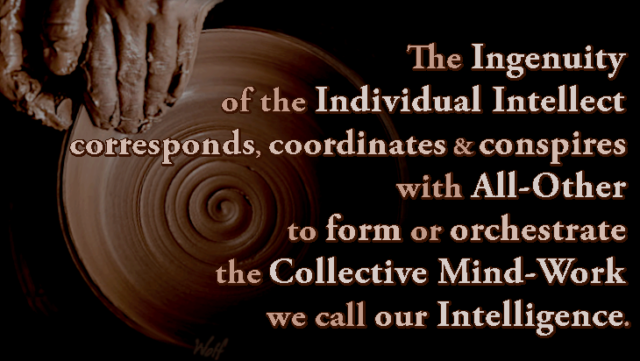
– are fundamental for any comprehensive system analysis;
they will help to set our Parameters-of-Awareness, – our Consciousness;
and are necessary to calibrate the mental bearings of our Inner Guidance System,
– the Compass in Chaos
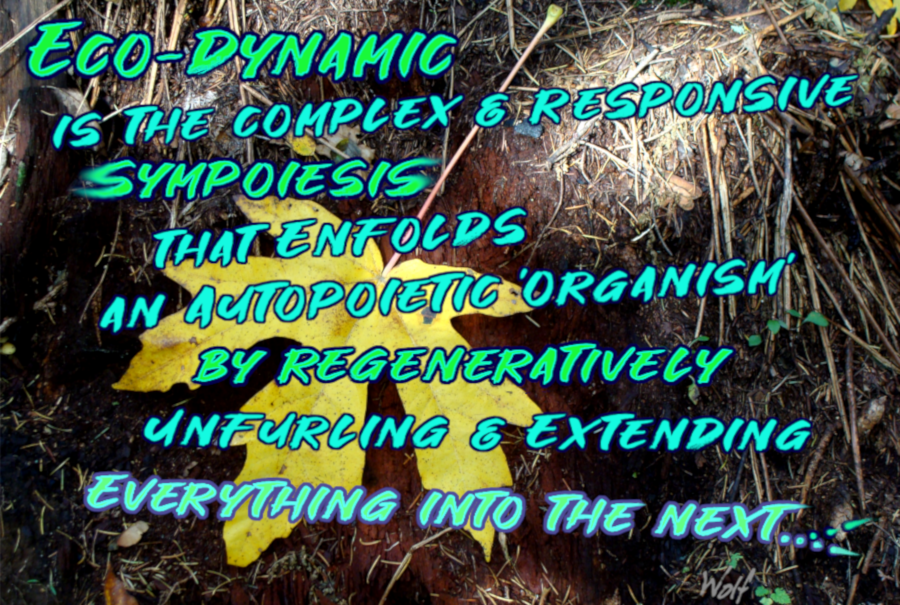
Eco-Dynamics:
is the complex and responsive sympoiesis that enfolds an autopoietic ‘organism’
by regeneratively unfurling & extending everything into the Next …
An illusive logic became a delusive belief.
Philosophy in Motion ?
The problems we are facing today are symptomatic for the absence of philosophical thinking.
This ‘Love for Wisdom’ became an unnecessary subject in ‘modern’ life, an
impractical & unproductive discipline in a world where only tangible properties count.
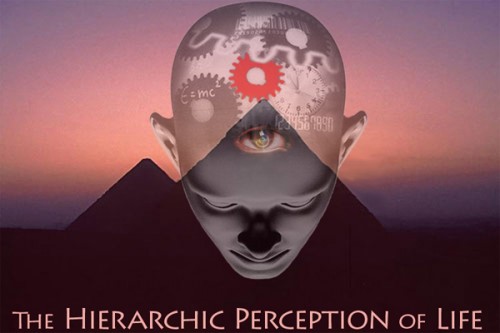
Our ‘modern’ way of thinking is manipulated & indoctrinated by a monocultural, monotheistic Belief in a
linear, hierarchic World Order, a system which is possessive & dominant in its nature,
and which divides & separates everything along the line of some rigid Laws of entitlements.
Since this way of thinking wants to isolate Philosophy from the other scientific disciplines,
it is no wonder that any traditional definition has its difficulties to outline its curriculum.
Philosophy or the ‘Seeking of Wisdom’, the Sapiens of our species is the essence of our consciousness,
a vital part of our intelligence and our perception of the world.
A Philosophy does not emerge out of nothing, nor does it exist
in separation from other disciplines or subjects.
On the contrary, our Philosophy is in constant interaction with our environment,
receiving & processing intellectual stimuli & challenges from the outside world
as well as from within our mind. Philosophy is like an intellectual ‘enzyme’
and absolutely necessary for the ‘digestive’ processes of the mind.
We need this wisdom to ‘ferment’ our experiences with other ideas,
to amalgamate our knowledge with Inspirations & Intuition, this philosophy develops
the Imagination & vision we so desperately seeking to co-create our Life, our world.
Therefore to better understand the co-creative nature of Philosophy we have to look at
the interrelationships it bears to other cognitive disciplines,
and the correlations it creates in our overall consciousness.
From science, health & education, to psychology, spirituality & social-economics,
every individual has to develop their own Philosophy which will open the door
to self-understanding, interconnect them with the rest of creation,
and guides them thru the chaos of life.
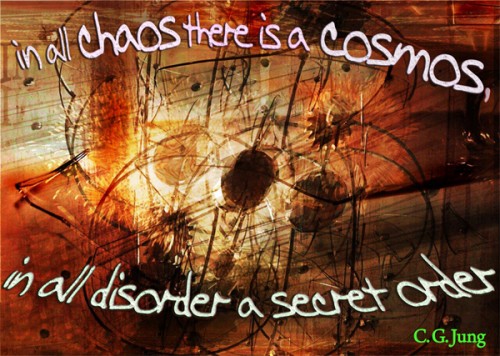
so, what about Chaos & Anarchy
Linguistic
Throughout these sites, I raise a lot of questions, and by making great use of
metaphors & allegories, I try to look beyond the obvious Linguistic implications.
This kind of analytical process is absolutely necessary to ‘make sense‘ of the psychological, sociological & ecological patterns of our natural habitat;
– and is fundamental for any real Change or Paradigm-Shift in our lives !
Decision vs. Choice
Decision-making is always reactive and relies on hope & belief.
These are, sooner or later, followed by disappointment, doubt & regret,
and new Decisions have to be made to fix the situation we did not choose.
Choices, on the other hand, reflect a completely different attitude & perception of life.
Choices are proactive and made with the confidence & optimism that
everything will work out, – one way or another.
Hope vs. Optimism
Hope is a Process-of-Balancing, not a Property or Attribute !
Conditioning vs. Education
Conditioning is the training of our sub-conscious mind & body-functions,
but Education addresses the conscious awareness to create knowledge & wisdom.
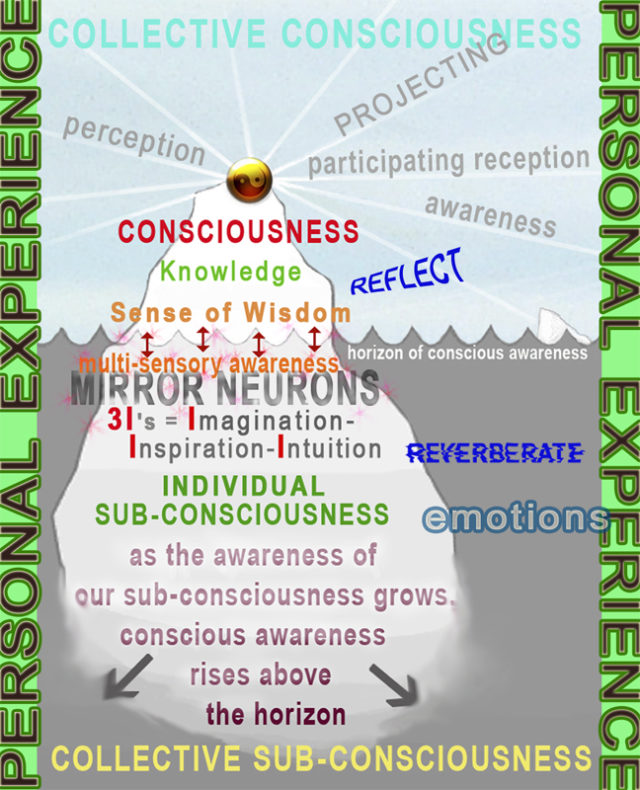
Subconsciousness vs. Unconsciousness
There are indefinite layers of consciousness,
from the all-including and underlying Super-Consciousness to the numerous layers of sub-consciousness.

A true sign of intelligence is not just knowledge & information, but also-
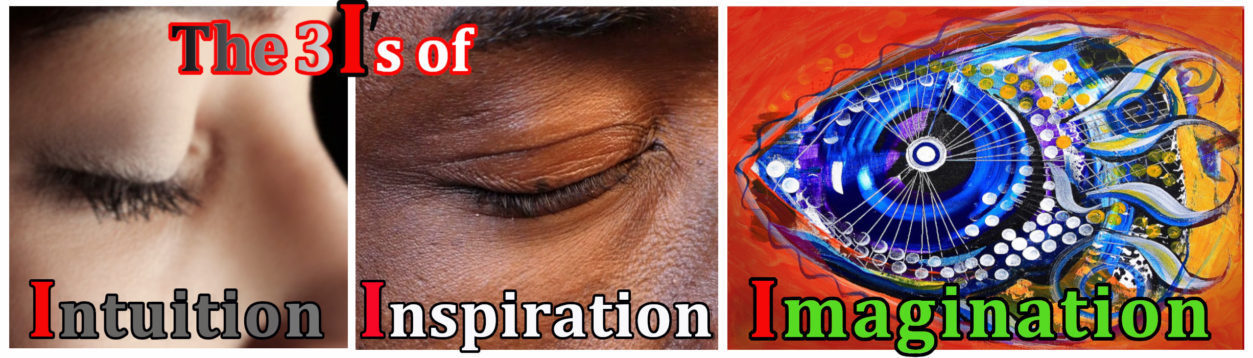
– they belong to everybody, they are very real and most valuable !
Anybody can use them for FREE !
The Ideas they create are more important to us than any other experience in life.
These 3I‘s represent the Insight & Vision we so desperately need !
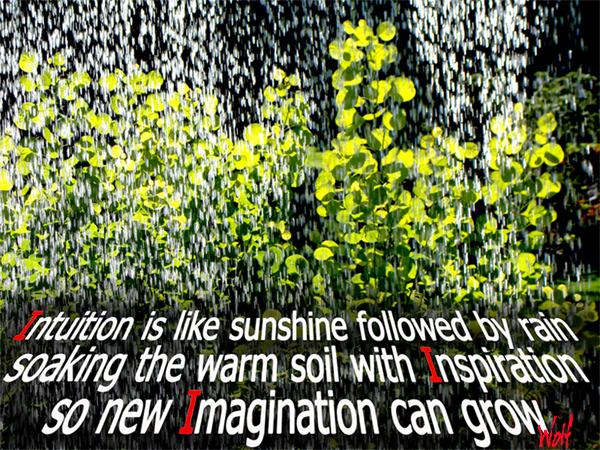
Imagination is everything, it is the anticipation & preview of life’s coming attractions.
Imagination is our Vision beyond the Horizon, and according to Einstein,
is way-more important than just knowledge.
… and then there is
The Idea of Fascism
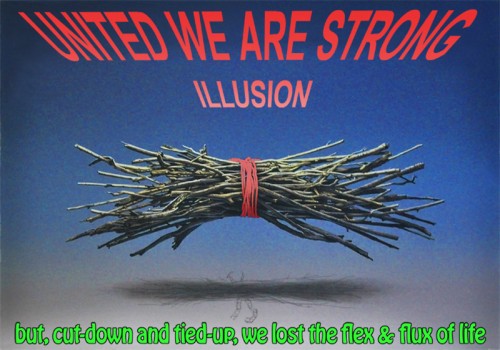
– is spreading the mental mutation of a hierarchic, chauvinistic paradigm.
Now a highly contagious pandemic, this mental disease sneaks-in thru
the backdoor of subconsciousness.
The idea is to manipulate & control the Social-Emotional-Intelligence of the individual,
turning masses of them into consenting cannon-fodder & consumers.
Psychology
Once considered the science of mental & physical health, then demonized and viewed as occultism & heresy by the Catholic Church, the whole concept of Psychology itself became infested with the ‘new economic’ thinking.
Psychology was the perfect instrument to redesign human nature, to create ‘happy’ & docile societies !
With the help of modern Psychology we completely deranged our perception of life,
turned reality into a big, ‘larger than life,’ collective delusion
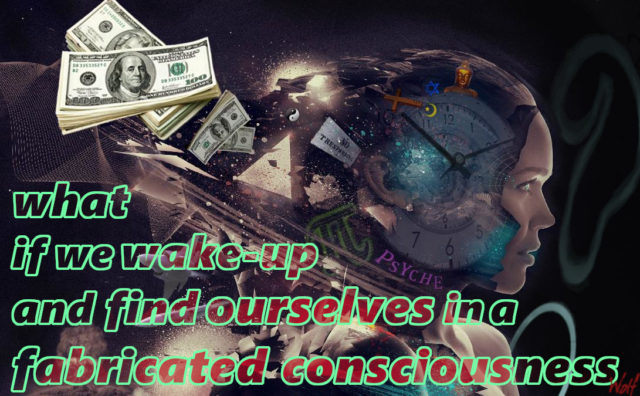
After dropping ecology out of our economic definitions, it made perfect sense
to do the same thing with the psyche in psychoanalysis.
Instead of helping the mind to untangle itself from heteronomous decision-making-processes, and supporting the individual to live a life of Free Choice, the new ‘psychology’ was just a scientific reconfirmation or reinforcement of the common delusions.
∞
Eternity ?
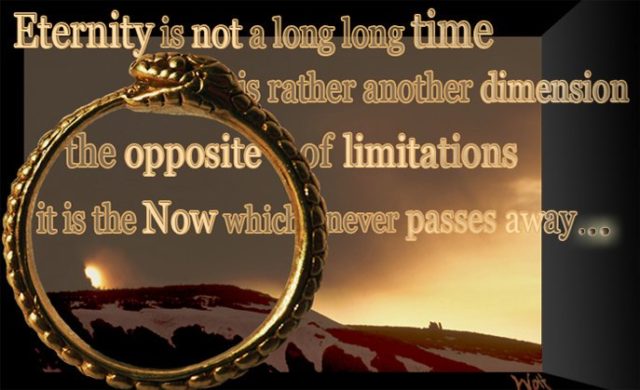
Eternity is a word for the intangible concept of the everlasting,
but constantly changing & transforming Momentum of Life;
– a linguistic expression for something Endless,
forever beyond & in-between Time & Space.
Eternity can not be captured, measured or detected by a devise or instrument,
it is abstract, irrational & incomprehensive for linear thinking;
– this is where Death becomes a part of Life.
The Paradox of a Final Beginning
Eternity encompasses absolute Everything,
and refers to a level of thinking where even Nothing is Something.
It is the unlimited & unrestricted Synergy of Motion
which can only be experienced or sensed
on a spiritual or e-motional level of consciousness.
Eternity is the infinite Reality within the Here & Now.

Social-Emotional-Intelligence
S E I
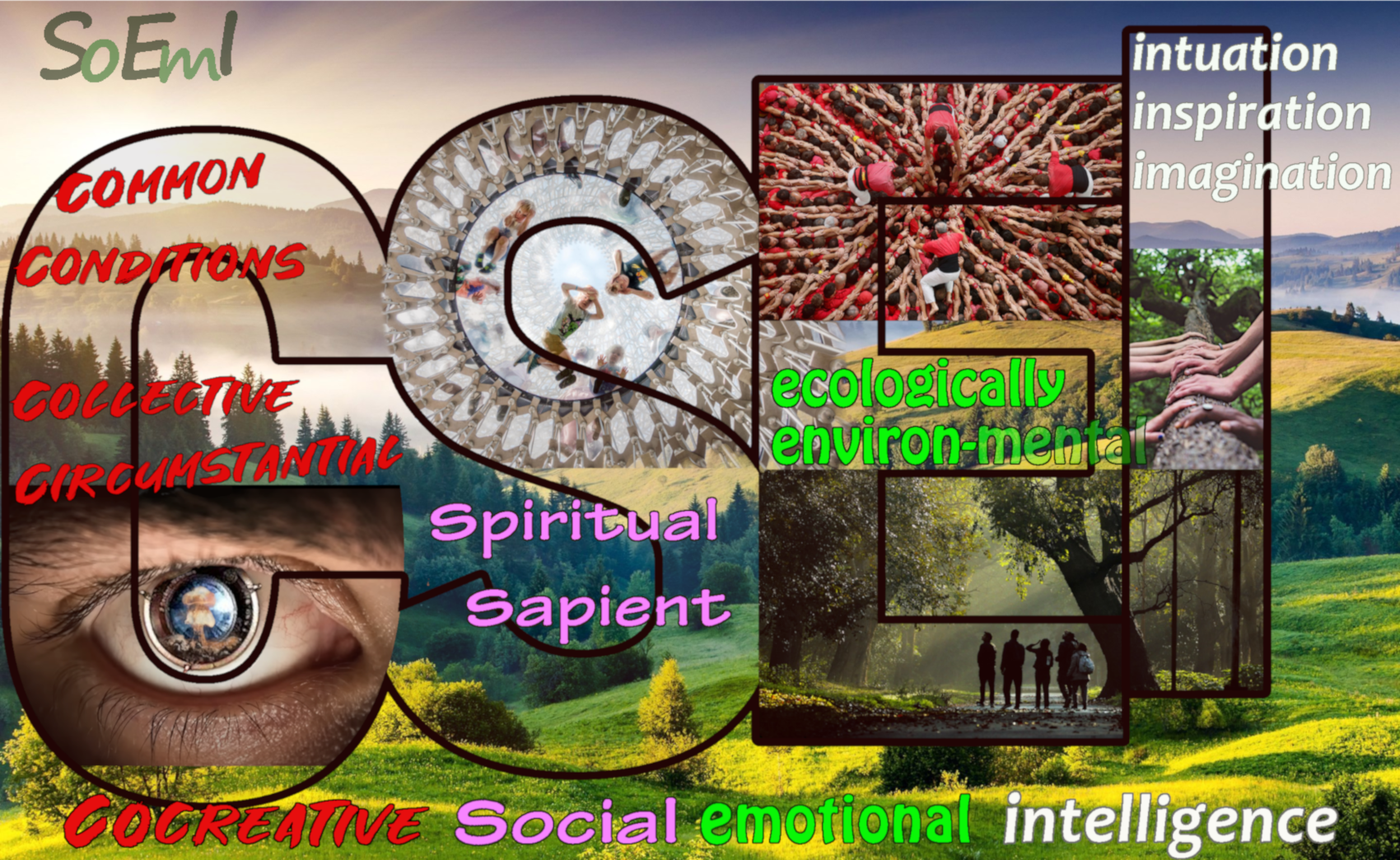
Since nothing & nobody exists on its own and everything is a collective & common achievement,
the Social Emotional Intelligence is the only Intelligence there is !
– The only Intelligence able to support the collective effort necessary to survive the environmental conditions,
or climate of the future.
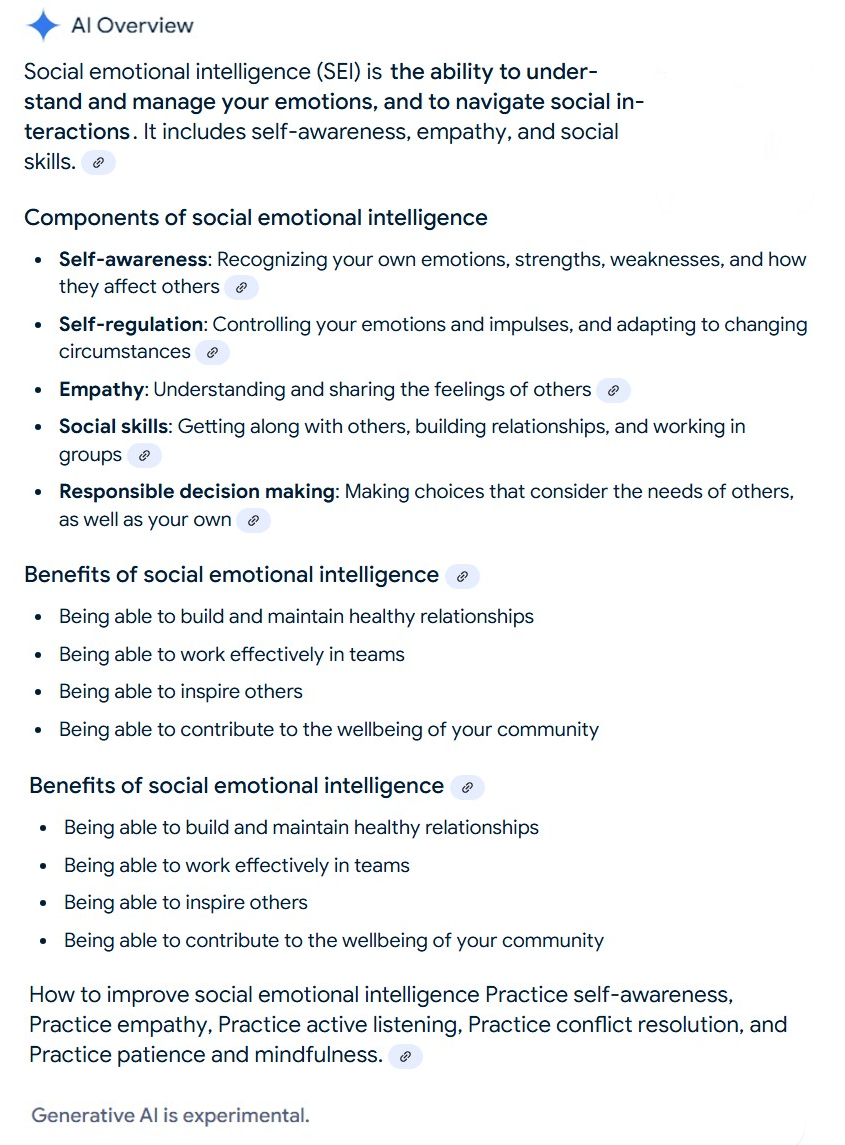
Social Emotional Intelligence (SEl) is our capacity to recognize our own, and other people’s emotions, to differentiate & communicate these feelings and to put them into a constructive & responsible relationship to our natural & social environment.
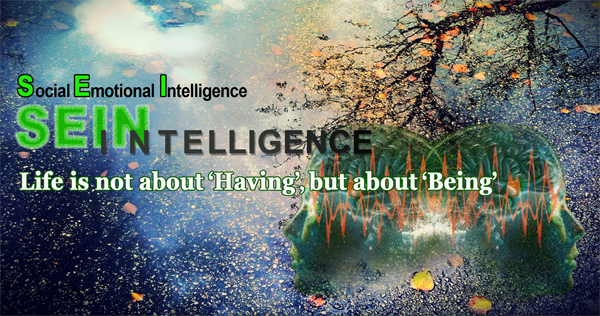
SEl is our ability to join empathy & emotions with rational observations & abstract thinking to enhance thoughts & understanding of interpersonal dynamics & collective consciousness. Humanity seems to have lost its common sense, this SEl; consequently, any effort to change, reform, renew or heal has to start right here & now with our Cocreative Social-Emotional-Intelligence.
Apperceptional Consciousness
vs
raw perception
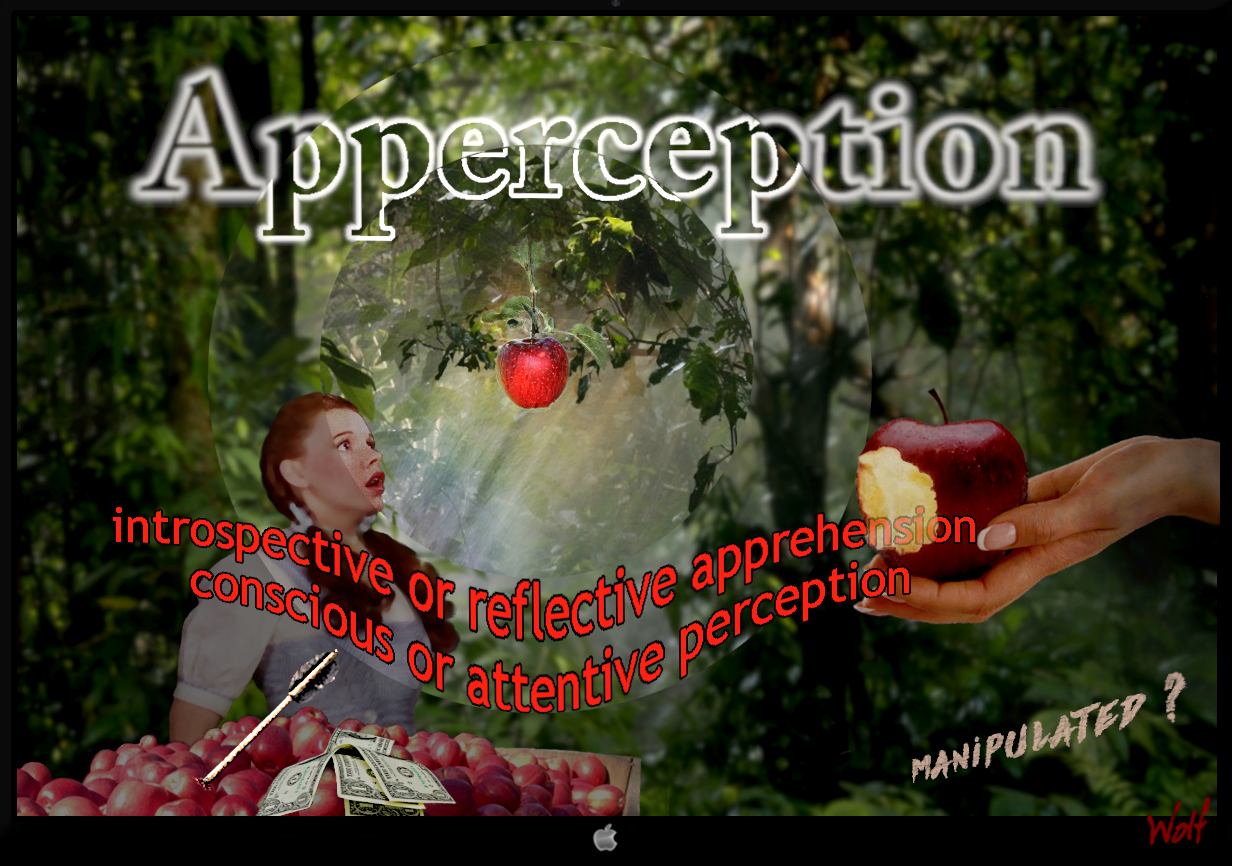
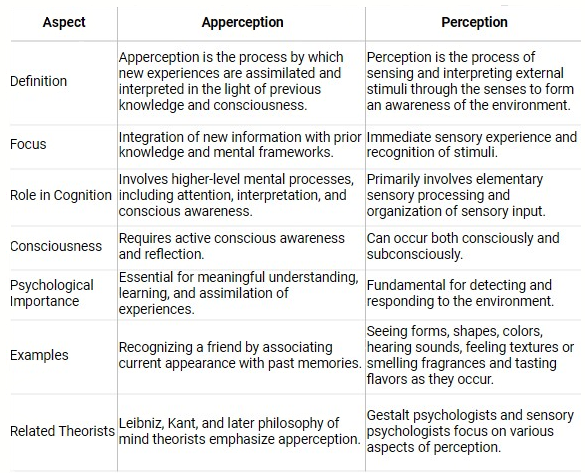
Apperception is an ‘active Subjectivity’, an ‘attentive perception’ that involves a—not always—conscious
interpretation and integration of sensory information with prior knowledge, while perception refers to
the immediate processing of sensory stimuli. Apperception enriches raw perceptual data by attaching
meaning based on experience, cognition and/or conditioning.
Apperception is a process—sometimes termed ‘apperceptive will’—by which new sensory information is integrated
and interpreted in light of prior knowledge and experiences, making it a higher-level cognitive function.
Perception refers to the initial sensory detection and processing of stimuli from the environment, primarily
involving sensory organs and basic neural pathways. While perception provides raw data input, apperception
gives meaning and context by linking this input to existing mental frameworks.
Understanding this distinction is crucial in cognitive psychology and sensory processing studies.
Connection
Apperception integrates raw sensory data from perception with existing knowledge and experiences, enabling
deeper understanding and awareness. Perception involves detecting and interpreting external stimuli through
sensory organs, while apperception processes these percepts within the context of memory and cognition.
This connection forms the foundation for conscious thought and informed decision-making in cognitive psychology.
Sensory Input
Sensory input refers to the process by which sensory receptors detect stimuli from the environment and
transmit this information to the brain for interpretation. In psychology, it plays a crucial role in
perception, influencing how individuals recognize and respond to sensory experiences such as sight,
sound, touch, taste, and smell. Sensory input involves various systems including the visual, auditory,
somatosensory, olfactory, and gustatory systems, each processing different types of sensory data.
Understanding sensory input mechanisms is essential for studying cognitive functions, behavior,
and disorders like sensory processing disorder.
Subjective Interpretation
Subjective interpretation in psychology refers to the individual’s unique perception and assessment
of experiences, events, or stimuli based on personal emotions, beliefs, and past experiences.
It plays a critical role in cognitive processes, influencing memory recall, decision-making,
and emotional reactions. Cognitive psychology highlight that subjective interpretation can easily
lead to logical fallacies such as confirmation bias or attribution errors, and maladaptive behavior,
affecting mental health and socio-ecological relationships.
That’s where our Social-Emotional intelligence comes into play !
Socio-Ecological Cohesion
MEANING
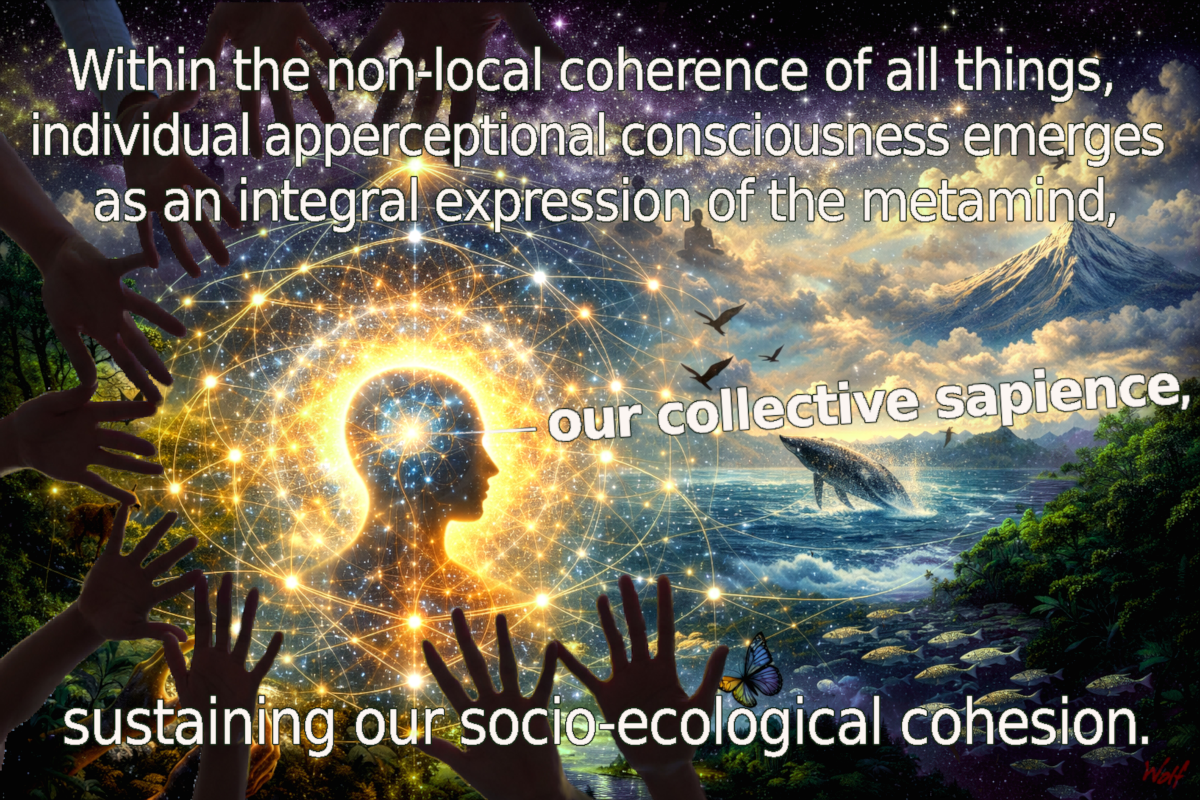
Socio-Ecological Cohesion denotes the condition in which human societies and natural systems exist in a mutually supportive and adaptive relationship.
It describes the dynamic interdependence and reciprocal influence between social organization, economic activity, and ecological processes within
a shared spatial and temporal context.
In such a system, human well-being is inseparable from the health and resilience of the environment. Cohesion therefore reflects a form of
systemic integrity in which societies maintain their identity and function while adapting to changing environmental and social conditions.
This perspective recognizes the continuous feedback between human action and ecological response, and that durable sustainability emerges only
when societal aspirations remain aligned with the biophysical limits of the Earth system. Achieving this balance requires adaptive governance,
equitable access to resources, and a deeper understanding of the complex dynamics that shape coupled human-natural systems.
ETYMOLOGY
The term Socio-Ecological Cohesion emerges from the convergence of sociological and ecological thought, particularly the systems-oriented
perspectives that gained prominence in the mid-twentieth century. These approaches increasingly recognized that human societies and
natural environments form interdependent components of a single dynamic system.
Socio- refers to the human dimension—social structures, cultural patterns, economies, and systems of governance. Ecological pertains to
the living and physical processes of the natural world: ecosystems, biodiversity, and the biophysical cycles that sustain life.
Cohesion denotes the condition of holding together, suggesting an integrated functioning of these distinct yet inseparable elements.
The concept gained relevance as scholars began examining coupled human-environment systems beyond disciplinary boundaries,
seeking to understand how social and ecological processes co-evolve within complex adaptive systems.
SUSTAINABILITY
Within the broader discourse on sustainability, Socio-Ecological Cohesion highlights that enduring stability and human flourishing cannot
arise from addressing social or environmental issues in isolation. Instead, sustainability depends on understanding how human activity
shapes ecosystem functions—and how the vitality of those ecosystems, in turn, sustains human societies.
From this perspective, sustainable development becomes a process of strengthening the adaptive capacity of both communities and
the environments they inhabit. A cohesive socio-ecological system mitigates environmental degradation, preserves biodiversity,
and safeguards essential resources for present and future generations.
Such a framework also illuminates the resilience of complex systems, enabling societies to anticipate and respond to disturbances—from
climatic shifts to economic or social transformations—without losing their fundamental integrity.
APPLICATIONS
In practice, Socio-Ecological Cohesion informs a wide range of sustainability strategies and policy frameworks. In urban development,
it encourages the integration of green infrastructure that simultaneously improves environmental quality, manages water flows,
and enhances the livability of human settlements.
In resource management, the concept supports adaptive governance of forests, fisheries, and agricultural systems by acknowledging
both ecological limits and the livelihoods of local communities. Conservation initiatives increasingly employ this perspective by involving
local populations in stewardship of protected landscapes, thereby linking biodiversity preservation with social well-being.
Likewise, disaster-risk reduction benefits from socio-ecological thinking by combining natural hazard mitigation with community resilience
and social support networks. Across these contexts, the aim remains the same: to cultivate systems in which human activity and
ecological integrity evolve in balanced and mutually sustaining relationship.

Sensory Perception
Sensory Perception is the Process by which our brain Interprets and organizes information received from our senses (sight, hearing, touch, taste, and smell), allowing us to understand and interact with the world.
Here a more detailed explanation:
- Sensation vs. Perception:
- Sensation: is the initial detection of sensory stimuli by our sensory receptors (like the eyes, ears, skin, etc.).
- Perception: is the higher-level processing and interpretation of those sensory signals into meaningful experiences.
- The Process:
- Stimuli: Our senses detect various stimuli from the environment (e.g., light waves for vision, sound waves for hearing, chemicals for taste and smell).
- Sensory Receptors: Specialized cells (sensory receptors) in our sensory organs (eyes, ears, skin, etc.) convert these stimuli into electrical signals.
- Neural Transmission: These electrical signals are transmitted along nerve pathways to the brain.
- Brain Processing: The brain processes these signals, organizing and interpreting them based on previous experiences, knowledge, and attention.
- Meaningful Experience: This processing results in our conscious perception of the world, allowing us to recognize objects, understand events, and interact with our surroundings.
- Examples:
- Seeing a red apple: Your eyes detect light waves, which are processed by the visual cortex, resulting in the perception of a red apple.
- Hearing a bird sing: Your ears detect sound waves, which are processed by the auditory cortex, resulting in the perception of a bird’s song.
- Touching a smooth stone: Your skin detects pressure and texture, which are processed by the somatosensory cortex, resulting in the perception of a smooth stone.
- Importance:Sensory perception is crucial for survival, navigation, and understanding the world around us. It is a fundamental aspect of human experience and plays a vital role in fields like psychology, neuroscience, and human-computer interaction.
- Sensory Adaptation:Our senses can also adapt to constant stimuli, becoming less sensitive to them over time (e.g., not noticing the constant hum of a refrigerator after a while).
Sympoiesis

‘Sympoietic’ describes something produced by collective creation or organization, where multiple entities create and sustain a system together, rather than through self-creation.
The term comes from the Greek words sún (together) and poíēsis (making or producing)
and is contrasted with ‘autopoietic‘ systems, which are self-making. Sympoiesis emphasizes interdependence and the idea that nothing exists in a vacuum but is part of a larger, interconnected whole.
Key Aspects of Sympoiesis
- Collective Creation:
The core idea is that things are made or produced together by multiple, diverse actors or elements. - Interdependence:
It highlights the rich interdependence of individuals and systems, where each part contributes to and relies on the others. - Openness:
Sympoietic systems have loosely defined boundaries and are structurally open, allowing for interaction and ongoing influence from their environment and other systems. - Contrast with Autopoiesis:
It’s the opposite of autopoiesis, which refers to self-creation and self-maintenance by a single entity. - Applications:
The concept is used in fields like ecology, to describe ecosystems where diverse species are interdependent, and in social contexts to explain how diverse human communities grow and learn together.
In simpler terms:
Think of a forest: no single tree makes the forest, but all the trees, plants, and animals interact and contribute to create the forest ecosystem. That’s a sympoietic system, where the whole is more than the sum of its parts and is produced through ongoing interaction and interdependence.